
Wayfaring Stranger is the dark American spiritual of a soul traveling through a world of woe, and the interactive player below is where to learn it: hear it at half speed, watch the notes and keys light up, and drag the score freely. Sheet music, fingering, and a free printable PDF follow.
Learn it with the interactive player
- Slow it down: x0.5 or x0.75 while you learn the notes, back to x1 once they flow.
- Pause anywhere: the current keys stay lit so you can find them on your own piano.
- Drag the score left or right, or use the 15s buttons, to replay a phrase.
The sheet music, section by section
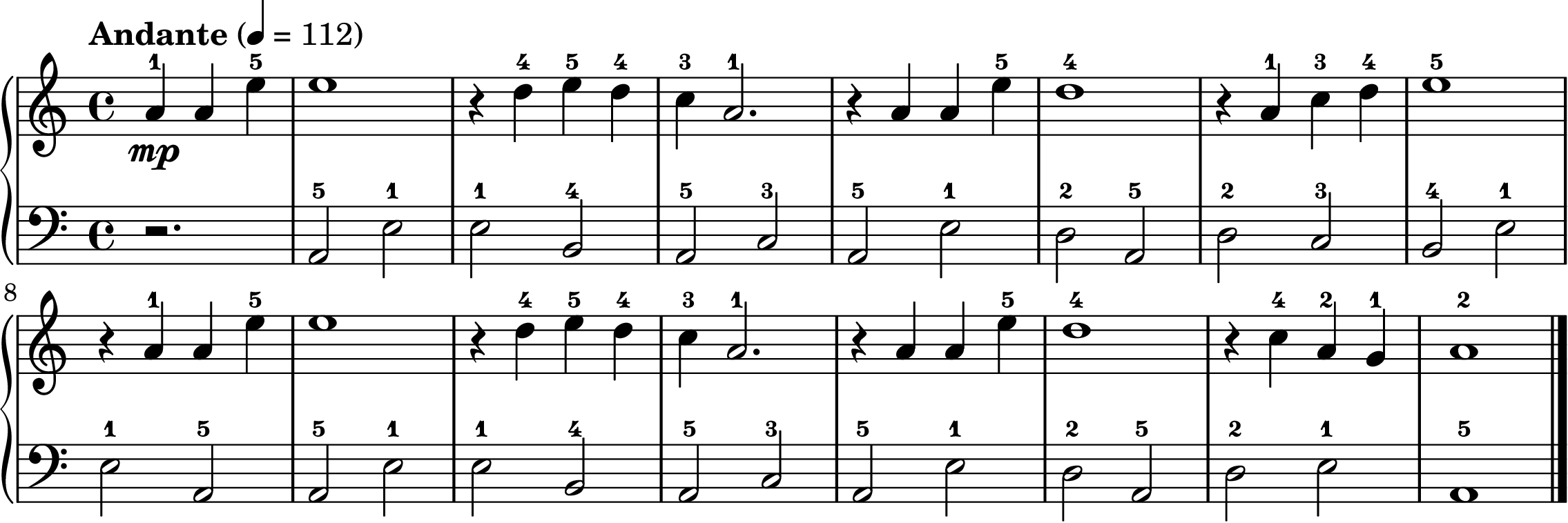
Play Section A at x0.5 on the player: from the A4 pickup the verse leaps to a long E5, turns D5-E5-D5 and sinks through C5 to A4. Most later phrases start on a quarter rest, so count the silent beat. In measure 14 the hand slips one key lower for the closing C5-A4-G4.
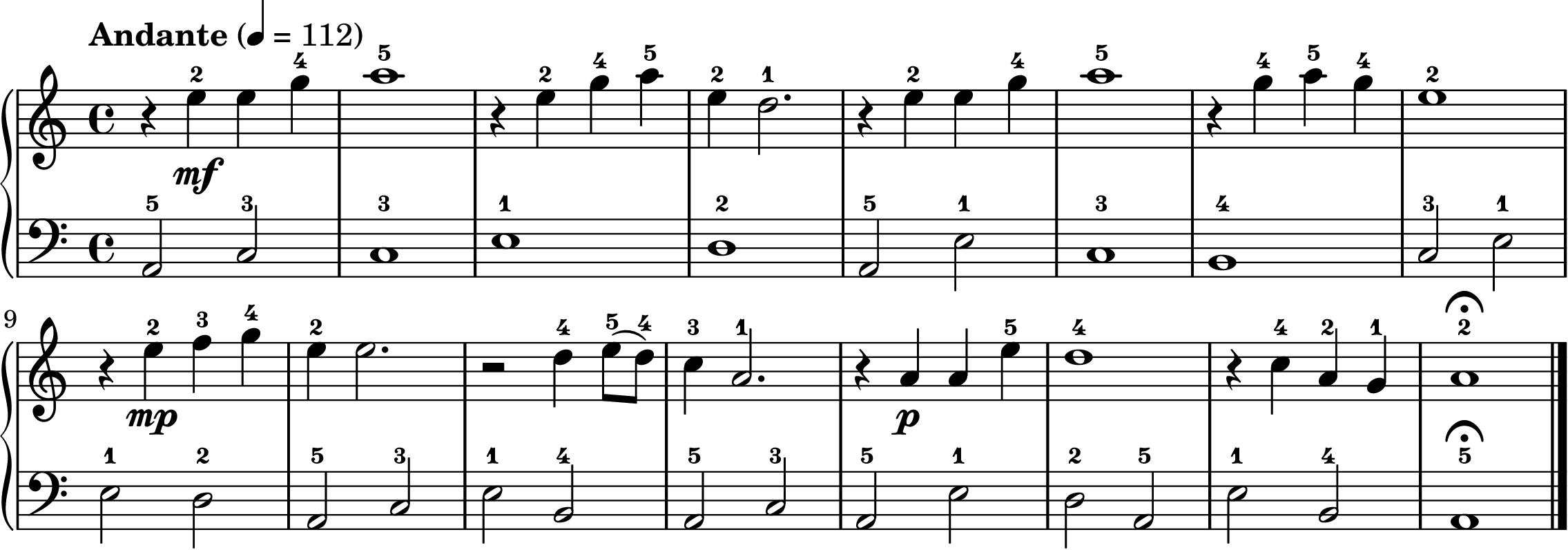
Section B is the chorus, I am going there. The hand moves up for it, thumb on D5 and pinky on A5, the highest note of the piece, one ledger line above the staff. Start mezzo-forte and soften at measure 24. Measure 26 is worth practicing alone: the hand slides back to A4 during the half rest, just before D5 and the only pair of eighth notes, E5-D5.
The full score
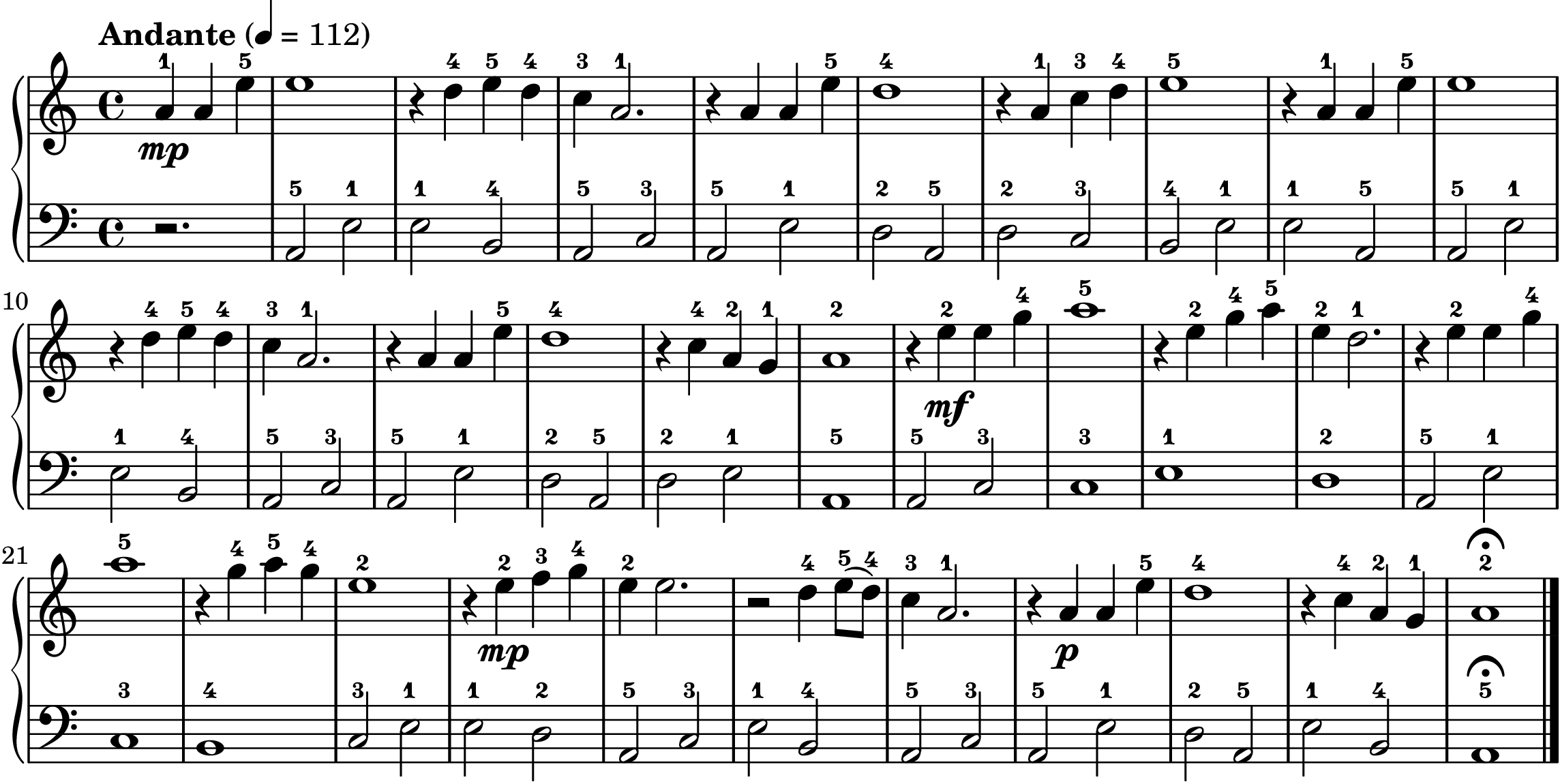
In the full score, sing the melody in your head as you play - this is a song before it is a piano piece, and phrasing it like a singer keeps the walking bass patient.
Note by note: keys and fingering
- Right hand: The hand uses three positions and moves only during rests. The verse sits in the A position: thumb (1) on A4, middle (3) on C5, ring (4) on D5, pinky (5) on E5, so the opening leap A4-E5 is 1 to 5. For the closing C5-A4-G4 in measures 14 and 30 the hand drops one key: C5 with 4, A4 with 2, G4 with the thumb. The chorus moves up to the D position, thumb on D5 and pinky on A5, and the hand comes back to A4 in the rest of measure 26. The table shows the finger each note gets most often.
- Left hand: Single notes in one position, no shifts: pinky (5) on A2, ring (4) on B2, middle (3) on C3, index (2) on D3, thumb (1) on E3. Mostly pairs of half notes, with whole notes under the long chorus notes.
| Note | On the Staff | On the Keyboard | Finger |
|---|---|---|---|
| A4 | Second space of treble staff | White key between the last two of three black keys | RH Thumb (1) |
| C5 | Third space of treble staff | White key left of the two black keys above middle C | RH Middle (3) |
| D5 | Fourth line of treble staff | White key between the two black keys above C5 | RH Ring (4) |
| E5 | Fourth space of treble staff | White key right of the two black keys above C5 | RH Pinky (5) |
| G4 | Second line of treble staff | White key between the first two of three black keys | RH Thumb (1) |
| F5 | Fifth (top) line of treble staff | White key left of the three black keys above C5 | RH Middle (3) |
| G5 | Space above the treble staff | White key between the first two of three black keys above C5 | RH Ring (4) |
| A5 | First ledger line above the treble staff | White key between the last two of three black keys above C5 | RH Pinky (5) |
| A2 | First space of bass staff | White key between the last two of three black keys, two octaves down | LH Pinky (5) |
| B2 | Second line of bass staff | White key right of the three black keys, two octaves down | LH Ring (4) |
| C3 | Second space of bass staff | White key left of the two black keys below middle C | LH Middle (3) |
| D3 | Middle line of bass staff | White key between the two black keys below middle C | LH Index (2) |
| E3 | Third space of bass staff | White key right of the two black keys below middle C | LH Thumb (1) |
Prefer a video? Watch the keys light up
Same color code as the player: green marks the right hand, blue the left hand, with the score and keyboard in one vertical video.
The story behind Wayfaring Stranger
Wayfaring Stranger is an American spiritual whose words first appeared in print in 1858, in Bever's Christian Songster, without music. The tune is traditional: no printed score of the melody sung today has been found from before the 1930s, and an 1882 hymnbook set the same words to a different tune. Its narrator is a poor wayfaring stranger crossing a world of woe toward a brighter home, a text that has made the tune a companion for mourners, soldiers, and folk singers alike. It spread through Appalachia, entered the country and folk repertoires in the 20th century, and has been recorded by everyone from Burl Ives to Johnny Cash. This arrangement follows the traditional tune, verse and chorus, in A minor over single bass notes.
Get the printable PDF
The printable PDF of this easy Wayfaring Stranger - full score, hand positions, and a step-by-step practice guide - ships inside our free Halloween pack together with fourteen other spooky pieces.
A song about a long road deserves an unhurried practice seat, and an Adjustable Piano Bench with Back Support makes those slow, singing sessions easier on your back.
Piano teacher? Track your students' practice. Join the early list
FAQ
How hard is Wayfaring Stranger on piano?
This arrangement belongs to Level 2 of our Halloween collection. The verse sits mostly in the A4 to E5 position, the chorus climbs to A5 in a second position, and there are no sharps or flats. The left hand walks between A2, B2, C3, D3, and E3 in half and whole notes.
How long does it take to learn Wayfaring Stranger?
About one to two weeks with regular practice. The tempo mark reads Andante, quarter note = 112, yet the melody moves in quarters, dotted halves, and whole notes, with one pair of eighths, so it still sounds slow. The verse reuses its own first line, the chorus ends on the verse's closing line, and the spots needing extra repetitions are the four hand moves.
What level is Wayfaring Stranger?
Level 2 of our Halloween collection: a hands-together song with a left hand that never leaves one position. It is a good first modal spiritual, with no accidentals; the widest move is the climb to A5 for the chorus.
What are the notes for Wayfaring Stranger?
From the A4, A4 pickup the verse leaps to a long E5, turns D5, E5, D5, and lands C5, A4. The next line runs A4, A4, E5, D5, then A4, C5, D5 up to E5, and the verse closes C5, A4, G4, A4. The chorus opens E5, E5, G5 to a long A5, and its last line is the verse's ending again. The left hand plays A2, B2, C3, D3, and E3. The full note-by-note table is above.